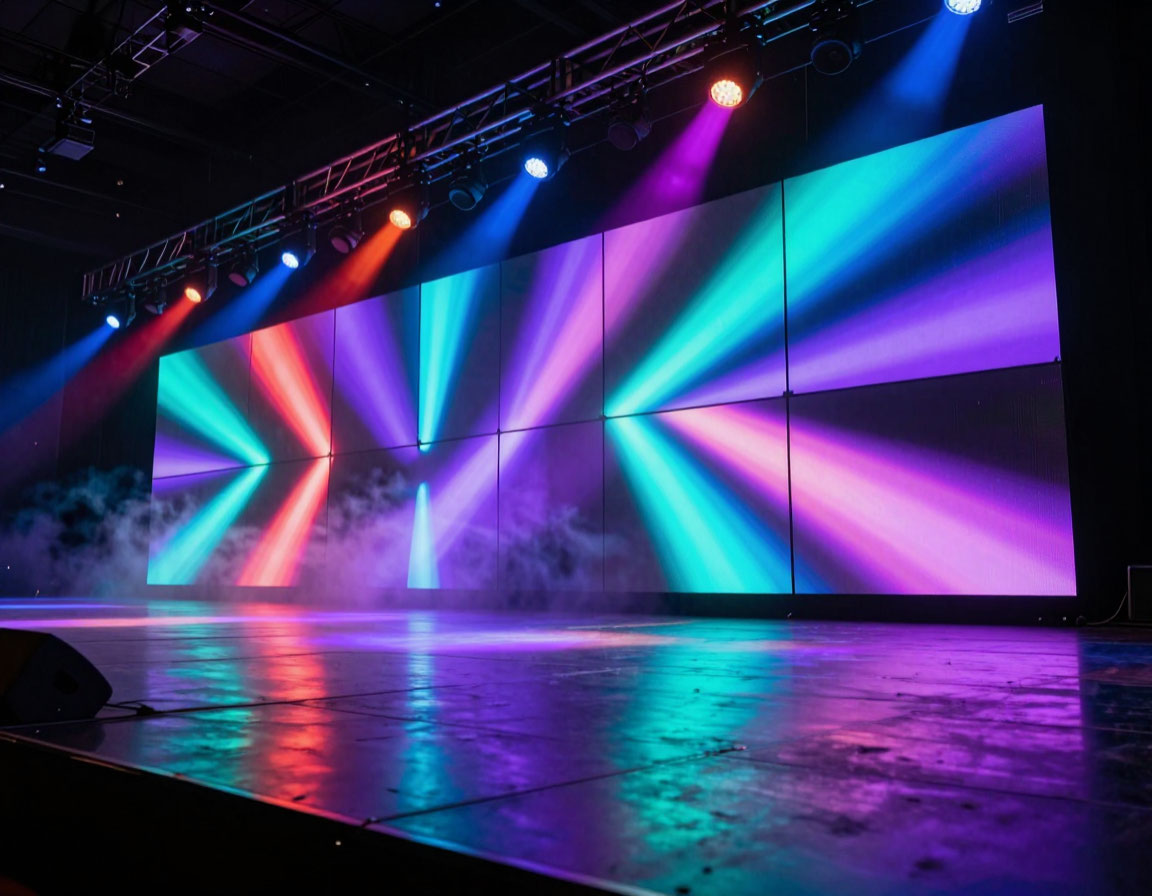
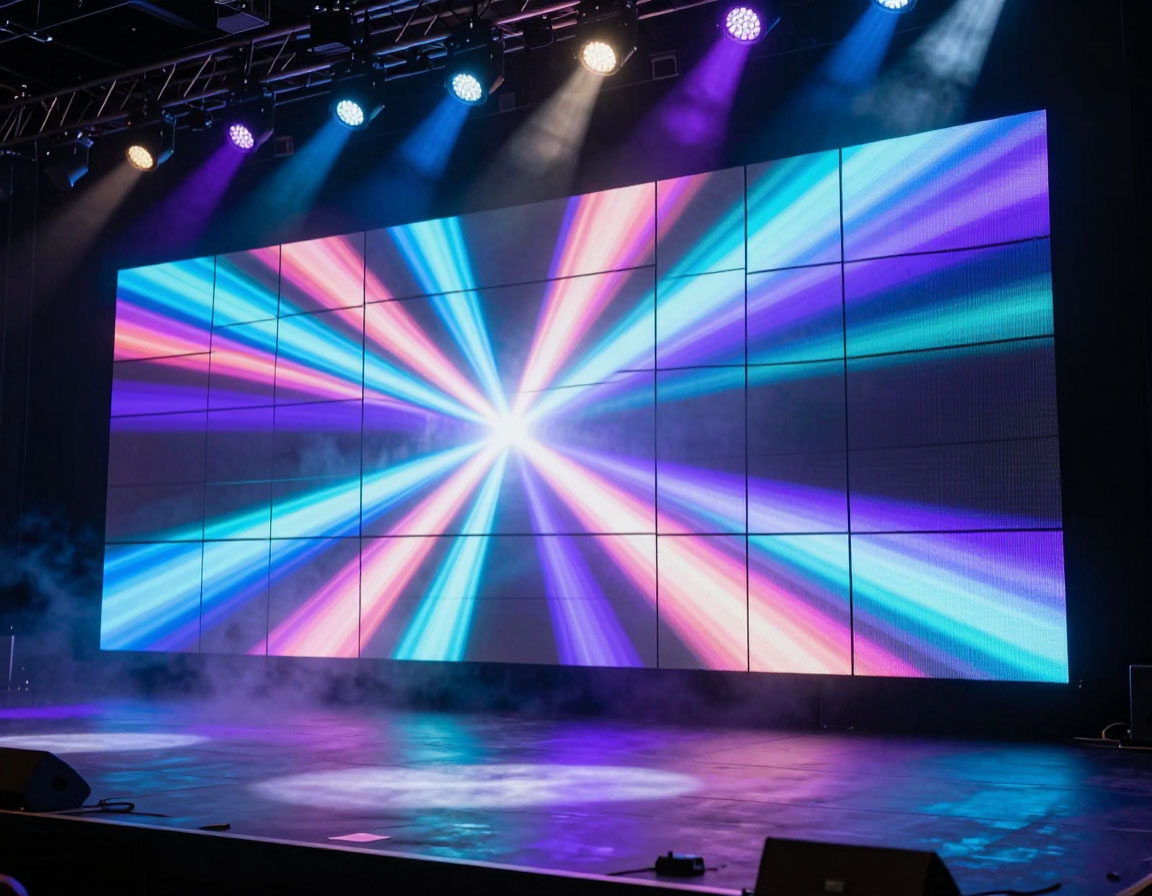
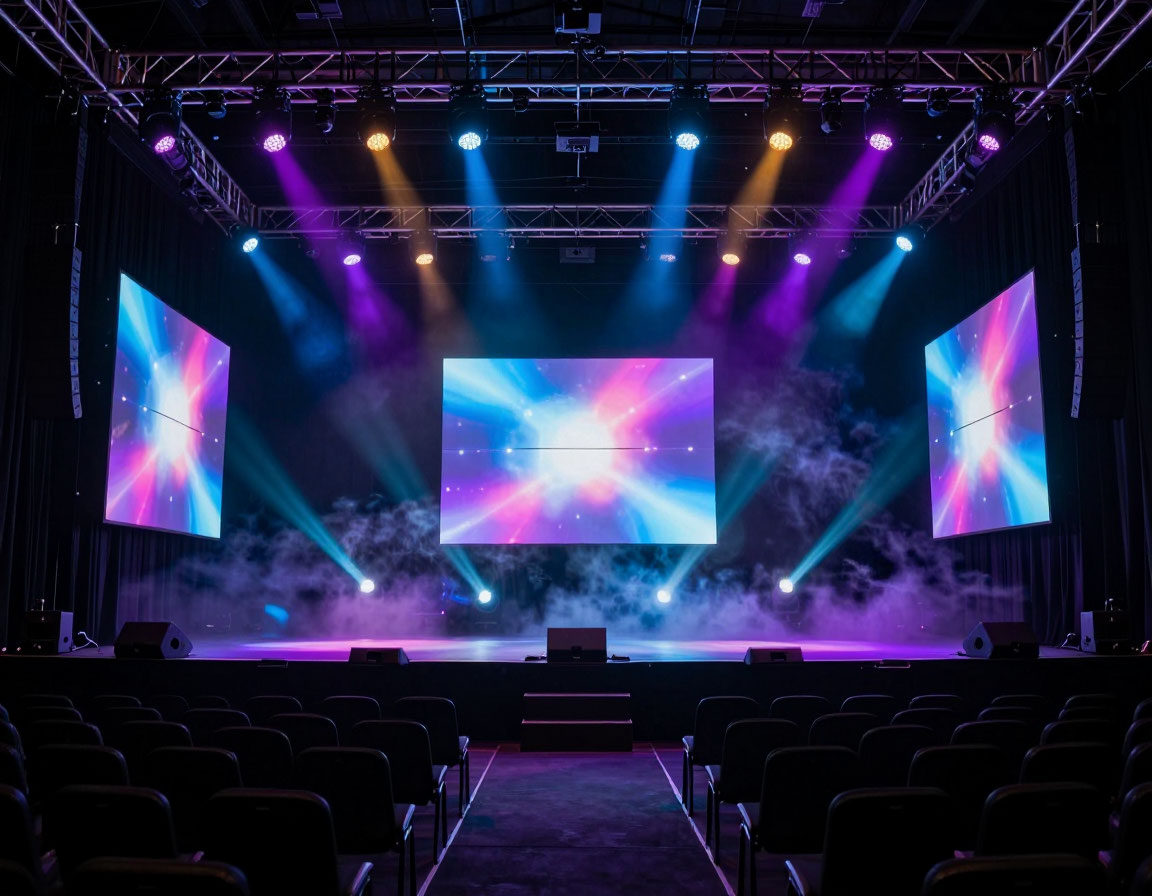
Stage-side modular LED backdrop
Client brief
A mid-size event venue required a stage-side surface that could switch between sponsor loops, ambient washes and live camera IMAG without visible bezels breaking the shot. The wall had to clear local fire rules for textile surrounds and allow a two-person crew to service tiles from the rear during changeovers.
What we delivered
We engineered a 6×3 metre tile grid on a slim steel frame with magnetic front masks, colour-calibrated to the house camera chain. Signal routing uses a single fiber hop to the booth; redundant receivers keep the wall live if one path drops during headline acts.
Materials and integration
Indoor-rated SMD modules, matte anti-moire finish, black-faced mesh for camera-friendly contrast, and thermally separated drivers so the textile curtain can sit within spec clearance without hot spots.
Signal path and redundancy
Video runs over fiber to a booth rack with a primary and hot-spare sender; automatic failover tested under pulled-cable simulation. Latency budget was shared with the house lighting desk so strobe cues and LED content stayed frame-aligned for IMAG. Color pipelines were aligned to the venue’s reference monitor using a shared 3D LUT; touring acts could plug laptops through a tested scaler profile without ad hoc guessing.
Service access during show weeks
Tiles on the lower two rows use quick-release hinges so a tech can swap a module between sets in under four minutes. Upper rows are reachable from a rolling tower stored backstage. Spare modules are labeled by cabinet position; the venue keeps two corner tiles and one center tile on hand based on historical failure rates from similar pitch classes.
Acoustic and structural coordination
The frame was decoupled from the stage shell with neoprene interfaces so bass energy from subs does not flex tile joints. Weight distribution was reviewed with the rigging vendor; pick points clear flown PA clusters. Fire marshal walkthrough included fabric certificates and documented power-down procedure for evacuations.
Post-handover
Six months after opening, a scheduled health check confirmed color drift within acceptable bounds; no tiles required replacement. The production team added a fourth “ambient brand” scene for podcast recordings filmed against the wall, using lower nits to protect talent eye comfort.
On-site timeline: 5 days including alignment, camera shading passes and handover tests.
"Cuts between content and live stage read clean on stream—exactly what our production team asked for." — Venue technical director